
FREQUENTLY ASKED QUESTIONS
Frequently Asked Questions
Clear Answers About Injuries, Treatment & Returning to Sport
From deciding whether surgery is necessary to knowing when you can drive, train, or compete again, every injury comes with questions.
Here are some of the questions Dr Anthony Kamel commonly addresses with patients and athletes.
1. Surgery & Treatment
Can I Avoid ACL Surgery? +
Not every ACL tear automatically requires surgery.
Some patients may be treated without surgery, particularly when the knee remains functionally stable and their activity demands do not require the level of stability needed for pivoting or high demand sports.
The decision depends on several factors, including knee stability, associated meniscus or cartilage injuries, symptoms, age, activity level, sporting demands, and individual goals.
For athletes who participate in sports involving cutting, pivoting, jumping, or sudden changes of direction, ACL reconstruction may be considered when instability limits safe participation.
The decision should be based on the patient and how the knee functions, not simply on the MRI.
Can a Meniscus Tear Heal Naturally? +
It depends on the tear.
Some meniscus tears have a better potential to heal than others because blood supply varies across different areas of the meniscus. The location, type, size, and stability of the tear all influence treatment.
Symptoms also matter. Not every meniscus tear seen on an MRI requires surgery, particularly if it is not causing significant pain, locking, instability, or functional limitations.
Treatment may include activity modification, rehabilitation, strengthening, and progressive return to activity. Surgery may be considered when symptoms persist or when the characteristics of the tear make surgical treatment appropriate.
Sports Medicine vs Sports Surgery: What's the Difference? +
Sports medicine focuses on the assessment, diagnosis, non surgical treatment, rehabilitation, injury prevention, and safe return to activity for sports and exercise related injuries.
Treatment may include rehabilitation, strength and conditioning, load management, activity modification, medication, or selected procedures when appropriate.
Sports surgery is the surgical side of treatment. It becomes relevant when an injury requires an operation to restore stability, repair an injured structure, or improve function.
They are not competing approaches. Sports surgery is one part of sports medicine when surgery becomes the appropriate treatment.
Are Cortisone Injections Dangerous? +
Cortisone injections can be useful for selected conditions, but they are not appropriate for every type of pain or every patient.
Potential benefits and risks depend on factors such as the condition being treated, injection site, dose, frequency, previous injections, and individual health factors.
Repeated or inappropriate injections may carry additional risks, which is why cortisone should not simply be used as a general solution whenever pain appears.
The important question is not whether cortisone is universally good or bad. It is whether it is appropriate for the specific condition and patient.
Is PRP Worth It? +
PRP may be considered for selected musculoskeletal conditions, but it is not a universal treatment for every orthopedic or sports injury.
Its potential effectiveness depends on factors such as the condition being treated, severity and characteristics of the injury, available evidence, symptoms, previous treatment, and individual patient.
PRP should therefore be considered as part of an overall treatment strategy rather than as a replacement for proper diagnosis, rehabilitation, strengthening, or other appropriate care.
The important question isn't simply whether PRP works. It is whether PRP is appropriate for your specific condition.
2. Recovery & Return to Activity
When Can I Drive After Surgery? +
There is no single timeline that applies to every patient or every operation.
Returning to driving depends on factors such as the type of surgery, side operated on, pain, mobility, strength, use of a brace or other restrictions, and medications that may affect alertness or reaction time.
Most importantly, the patient needs to be able to safely and confidently control the vehicle and react appropriately if an emergency occurs.
Being able to sit comfortably in the driver's seat does not necessarily mean you are ready to drive safely.
How Long Before I Return to Sports? +
Return to sport shouldn't be based on time alone.
Healing is important, but the body must also recover the strength, stability, mobility, movement control, functional performance, and sport specific abilities required for the activity.
The requirements are also different depending on the sport. Returning to jogging is not the same as returning to football, basketball, martial arts, or another activity involving rapid changes of direction and contact.
A progressive return helps determine whether the body can tolerate increasing demands safely. Feeling better doesn't always mean being game ready.
Will I Miss My Season After an Injury? +
It depends on the injury and the individual athlete.
The treatment plan may consider the type and severity of the injury, treatment required, timing within the season, sport, playing position, competition schedule, recovery, and risk of further injury.
In selected situations, treatment timing may also need to consider the athlete's season and sporting commitments, provided that doing so is medically appropriate.
The priority is not simply returning as quickly as possible. It is finding the safest strategy for the athlete's health, recovery, and sporting goals.
3. Pain & Recurring Injuries
Can I Play Through Pain? +
Not every type of pain means the same thing.
Temporary discomfort can sometimes occur with exercise, but pain that persists, worsens, changes how you move, affects performance, or repeatedly returns during activity should not simply be ignored.
Continuing to train without understanding the cause may allow an injury to persist or worsen.
An assessment can help determine what is causing the symptoms and whether activity can continue, needs to be modified, or should temporarily stop. The goal isn't always complete rest. It is knowing what your body can safely tolerate while recovering.
Why Does My Ankle Keep Spraining? +
Repeated ankle sprains can occur when the ankle has not fully recovered from a previous injury.
After an ankle sprain, deficits may remain in strength, balance, stability, proprioception, and neuromuscular control, even after pain and swelling have improved.
This can leave the ankle more vulnerable when running, jumping, landing, or changing direction.
Recurrent sprains should therefore be assessed to determine whether rehabilitation is incomplete or whether chronic ankle instability or another underlying problem is contributing. Being pain free doesn't necessarily mean the ankle has fully recovered.
Why Does My Ankle Hurt? +
Ankle pain can come from several different structures and conditions.
Possible causes include ligament injuries, Achilles tendon problems, tibiotalar impingement, osteochondral injuries, stress related injuries, previous sprains, or instability.
The location of the pain, how the injury started, movements that trigger symptoms, swelling, instability, previous injuries, and sporting demands can all help identify the cause.
Persistent or recurring ankle pain should therefore be assessed rather than treated as a generic ankle problem. The right treatment starts with identifying which structure is involved and why it is causing symptoms.
What Causes Recurrent Shoulder Dislocations? +
After an initial shoulder dislocation, structures that help stabilize the joint may become injured, increasing the risk of future instability or another dislocation.
The likelihood of recurrence can depend on factors such as age, anatomy, the initial injury, number of previous dislocations, activity level, and participation in contact or overhead sports.
Some patients may respond to rehabilitation focused on strength and stability, while others may require surgical stabilization.
Repeated dislocations should be properly assessed because treatment depends on why the shoulder continues to be unstable, not simply on the number of episodes.
4. Supplements & Regenerative Treatments
Does Collagen Repair Cartilage? +
Collagen supplements should not be considered a way to simply rebuild damaged cartilage.
Cartilage injuries and degenerative joint conditions are more complex, and treatment depends on the specific diagnosis, symptoms, joint function, activity level, and individual patient.
Nutrition can support overall health, but supplements should not replace the fundamentals of joint care, including movement, strength, appropriate load management, healthy nutrition, rehabilitation, and medical treatment when indicated.
The focus should be on managing the condition as a whole rather than expecting one supplement to repair the joint.
Can Supplements Prevent Sports Injuries? +
Supplements alone cannot prevent sports injuries.
Protein, creatine, collagen, vitamins, and other supplements may support nutrition, performance, or recovery when appropriately indicated, but they cannot compensate for poor preparation or excessive training demands.
Injury prevention relies more broadly on factors such as progressive training, strength, conditioning, appropriate technique, recovery, sleep, nutrition, and managing training load.
Supplements can support a well designed plan when needed. They are not the plan.
STILL HAVE QUESTIONS?
Every Injury Is Different.
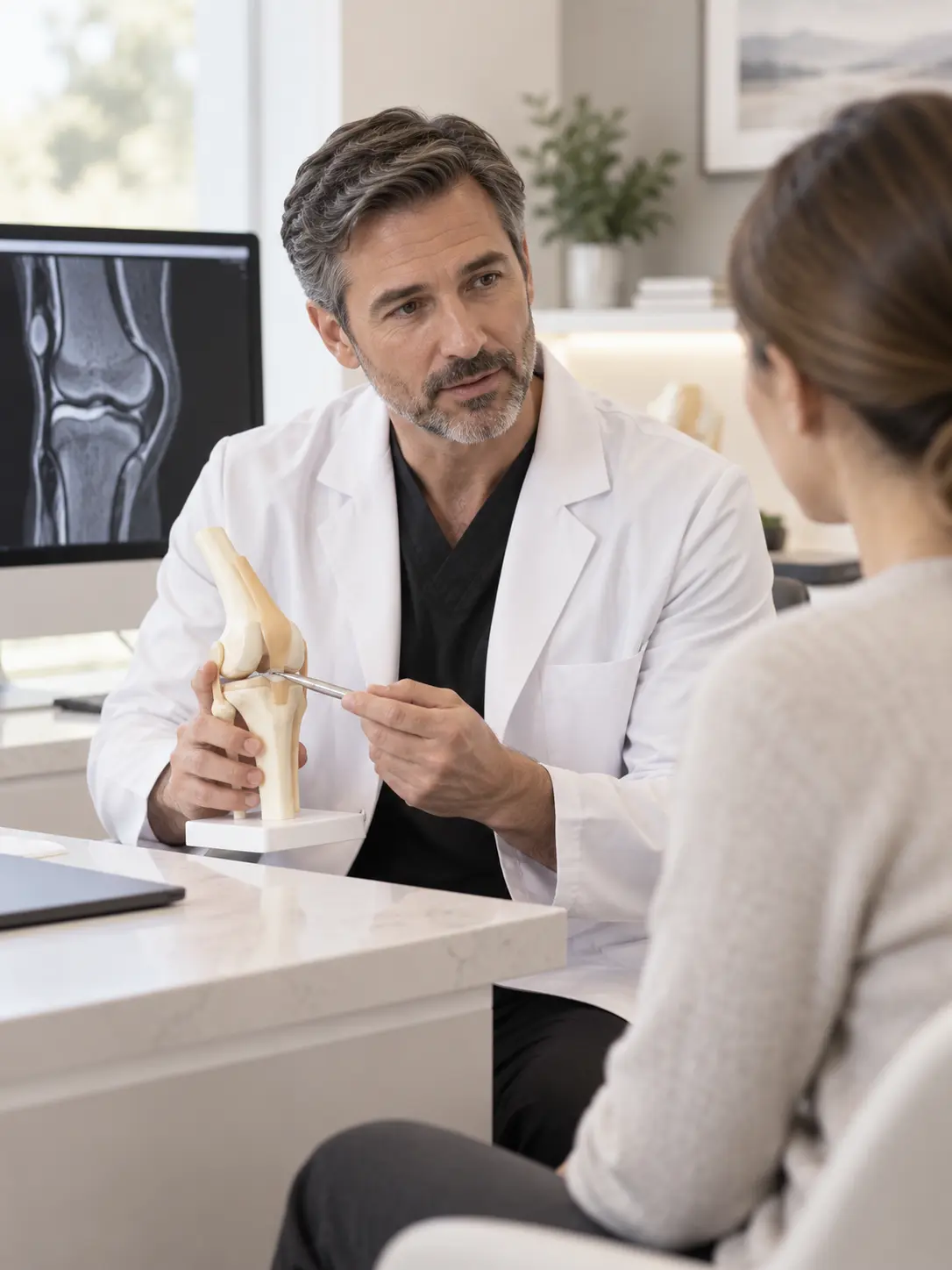
An MRI result, a diagnosis, or a general recovery timeline cannot determine the right treatment on its own. Your symptoms, clinical examination, activity level, sporting demands, goals, previous treatment, and individual circumstances all contribute to the decision.
Get the Right Answer for Your Injury. Dr Anthony Kamel | Orthopedic Surgeon | Sports Medicine & Sports Surgery
Dr. Anthony Kamel