
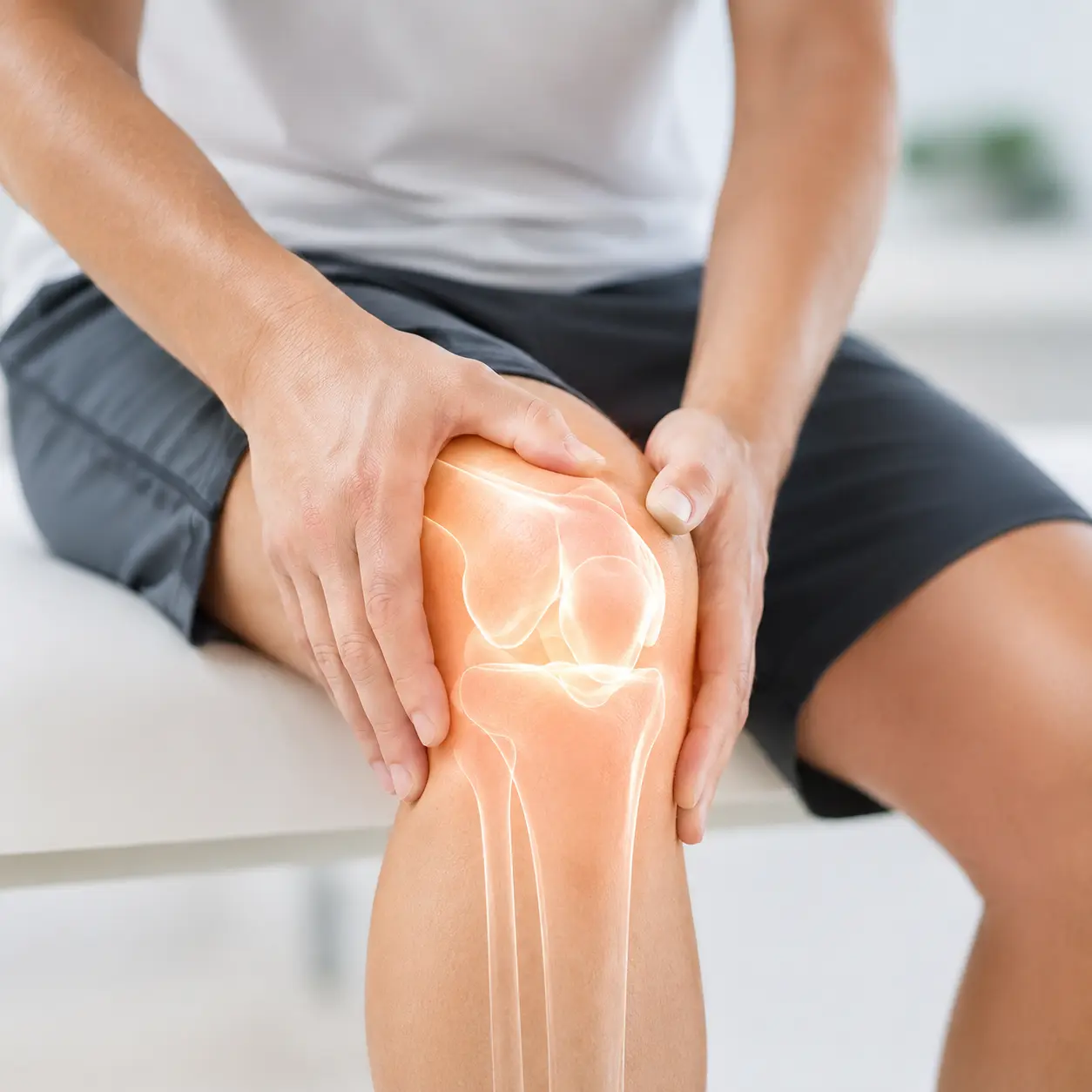
PRP may be considered for selected musculoskeletal conditions as part of an individualized treatment plan.
Not every injury requires the same approach, and not every orthopedic problem requires surgery.
Dr Anthony Kamel provides individualized treatment for sports injuries and musculoskeletal conditions, ranging from conservative care and injections to ultrasound guided procedures, arthroscopy, and sports surgery when appropriate.
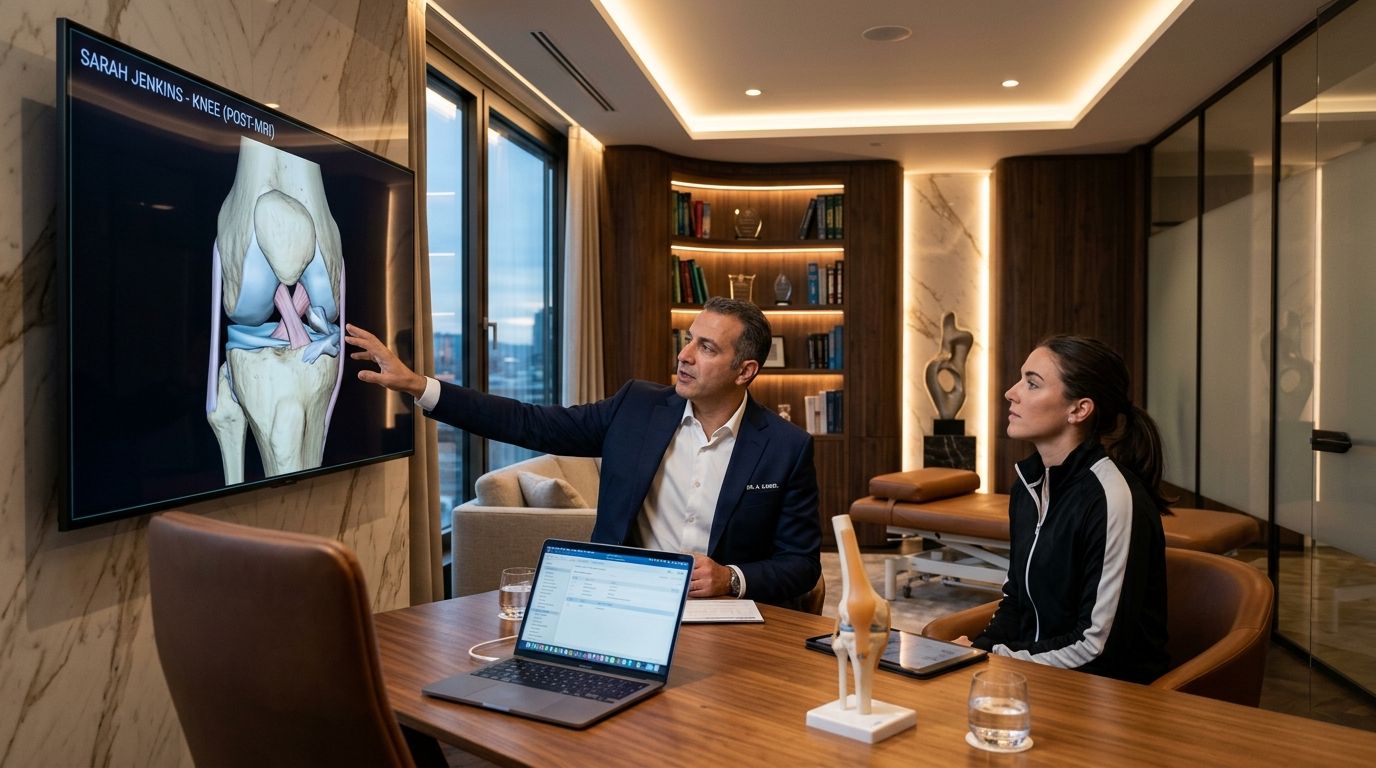
Injections & Ultrasound Guided Procedures
Selected injections and ultrasound guided procedures may form part of a broader treatment plan for certain orthopedic and sports related conditions.
The appropriate treatment depends on the diagnosis, symptoms, condition being treated, and individual patient.
PRP may be considered for selected musculoskeletal conditions as part of an individualized treatment plan.
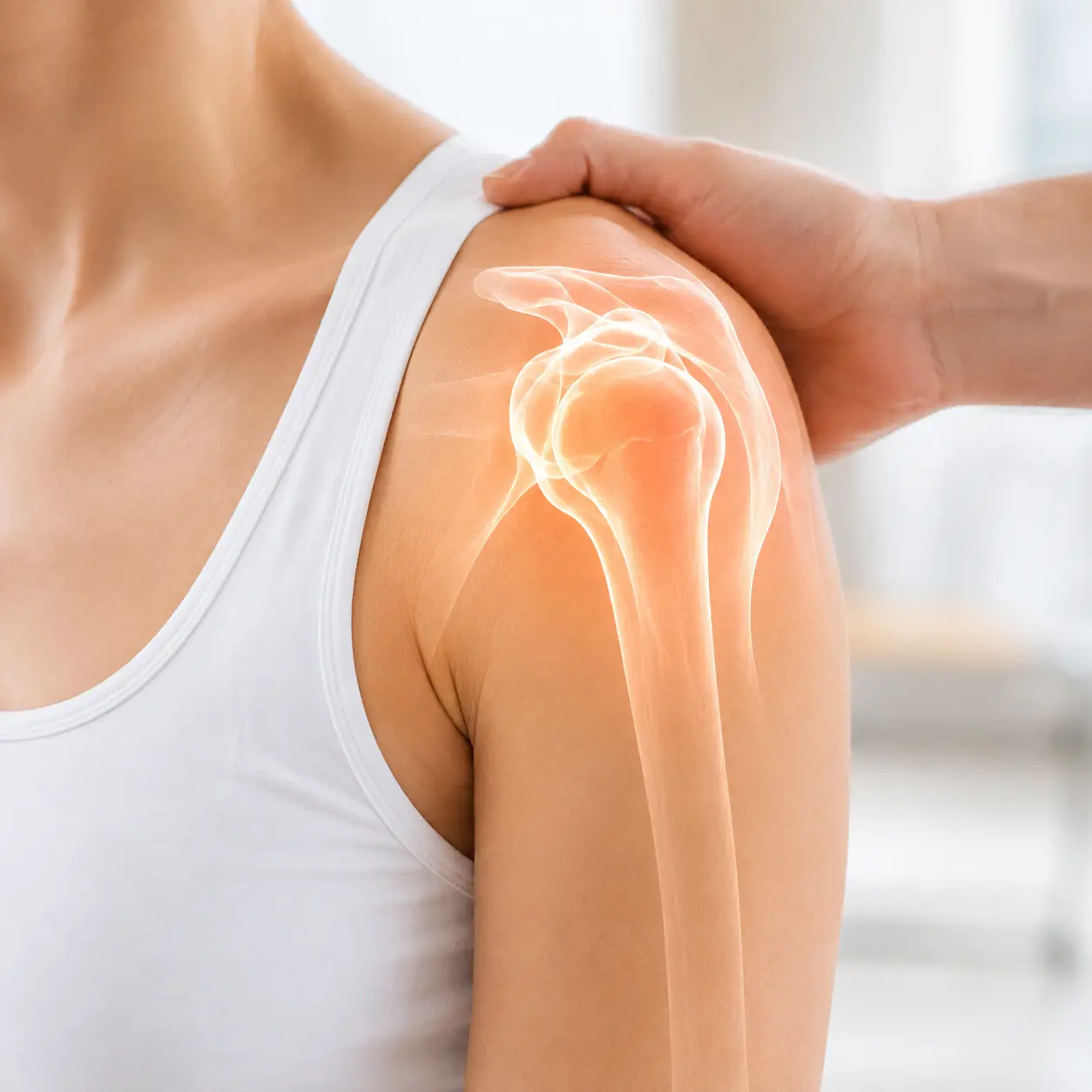
Cortisone injections may be considered for selected conditions when clinically appropriate, based on the diagnosis and individual patient.
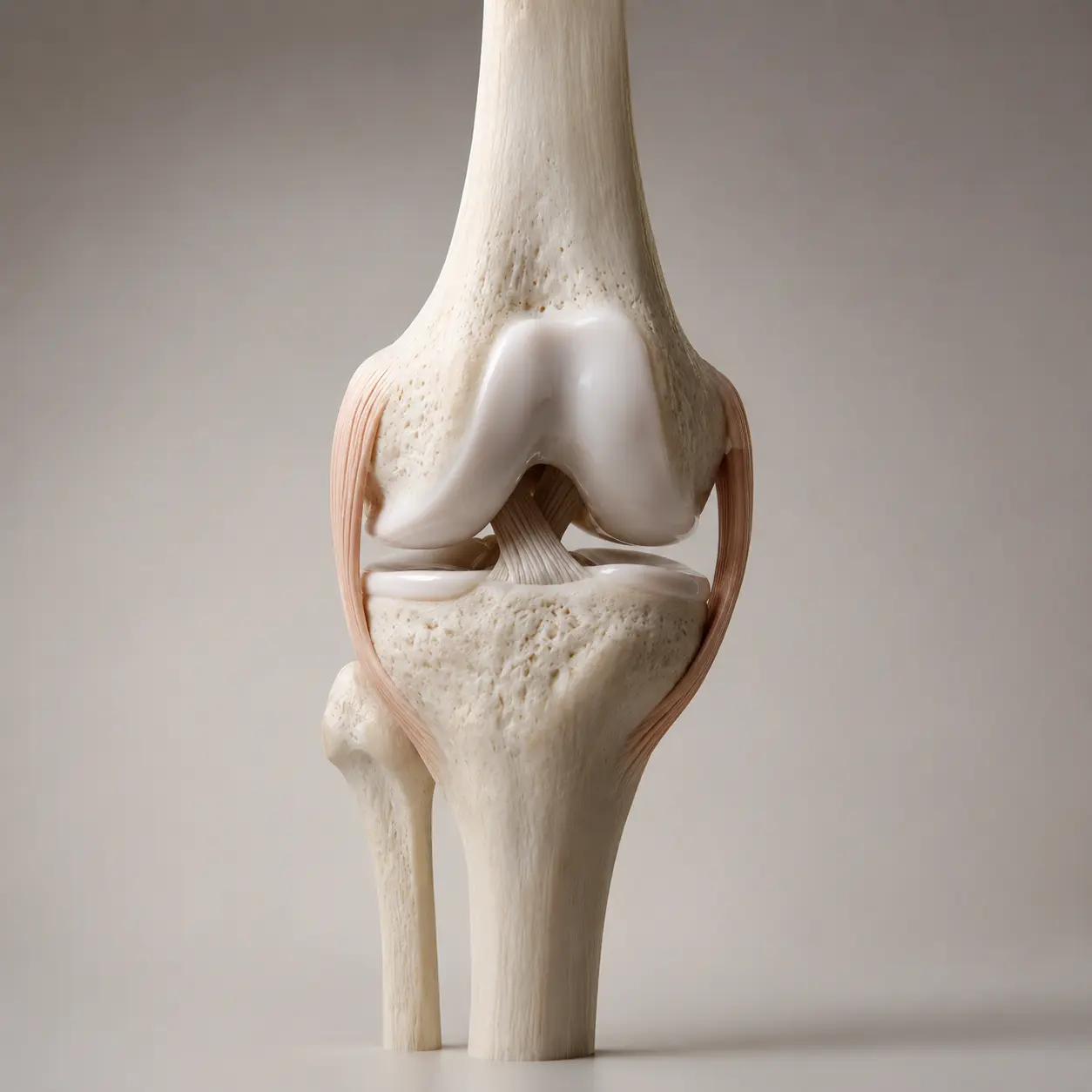
Hyaluronic acid injections may be considered for selected joint conditions as part of a broader treatment strategy.
Whether they are appropriate depends on the joint involved, diagnosis, symptoms, and individual patient.
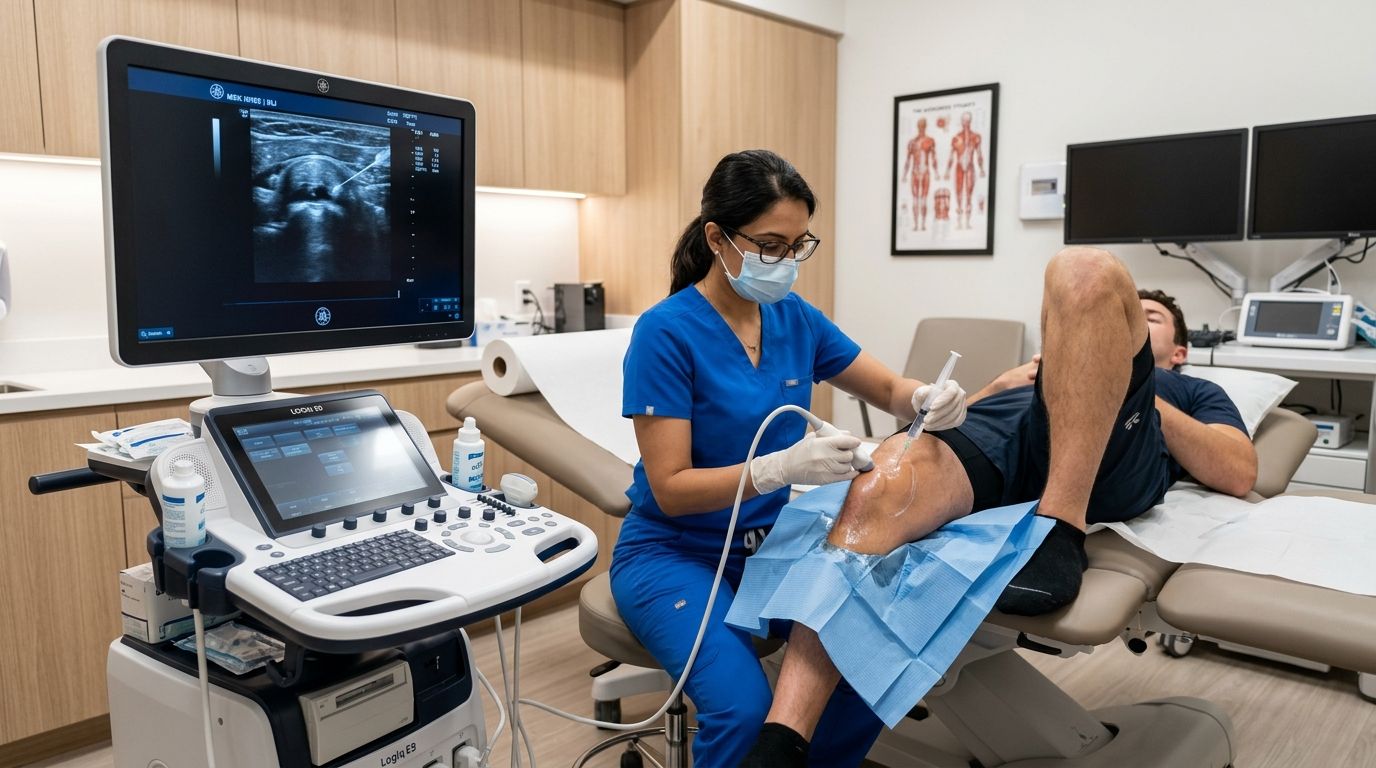
Ultrasound guidance allows the physician to visualize anatomical structures in real time while performing selected procedures.
It may be used for certain joint, tendon, muscle, and sports related conditions when appropriate.
Knee Surgery Treatments
When a knee injury requires surgery, the procedure is selected according to the injured structure, knee stability, associated injuries, activity demands, and individual goals.
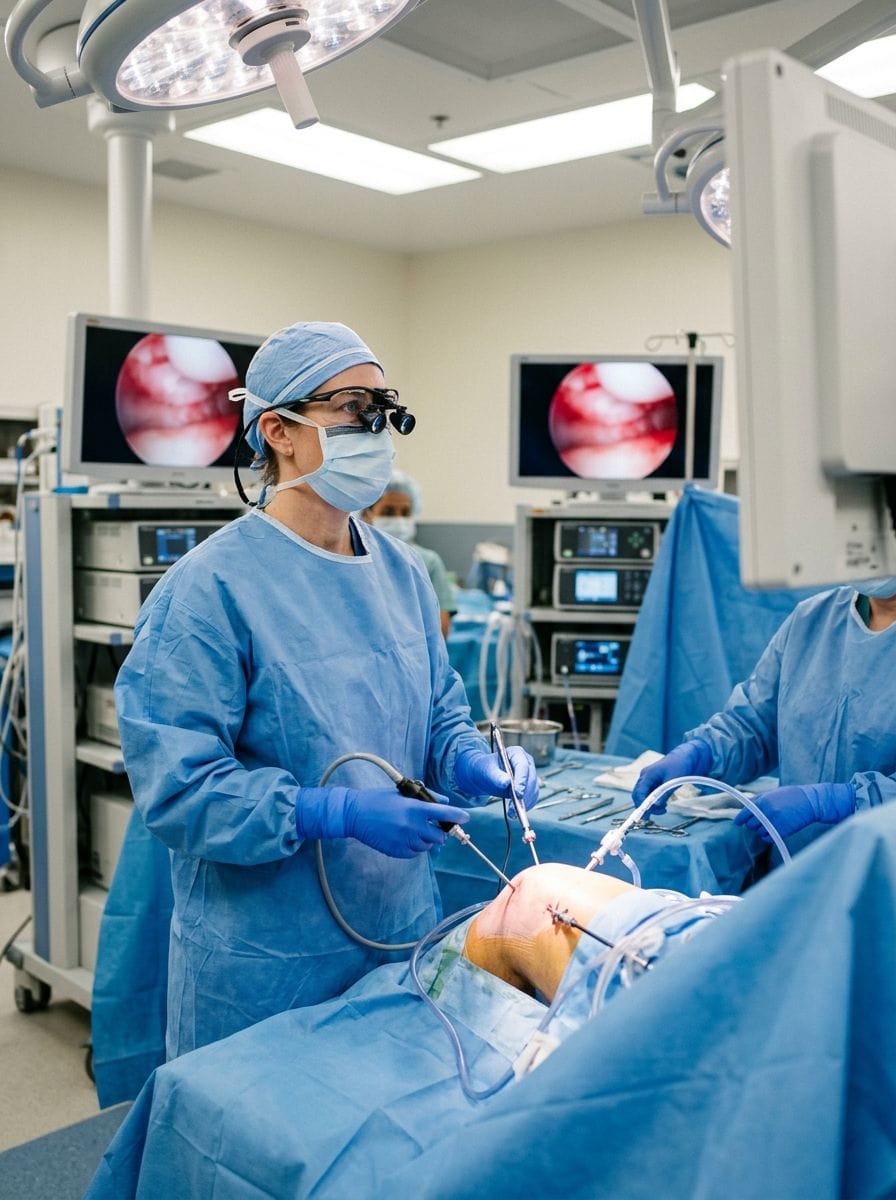
ACL reconstruction may be considered when an ACL injury causes significant instability or when the patient's sporting and activity demands require surgical treatment.
The surgical approach is individualized according to the injury and patient.
Not every meniscus injury requires surgery.
When surgery is appropriate, treatment depends on factors such as the type and location of the tear, symptoms, associated injuries, and individual patient.
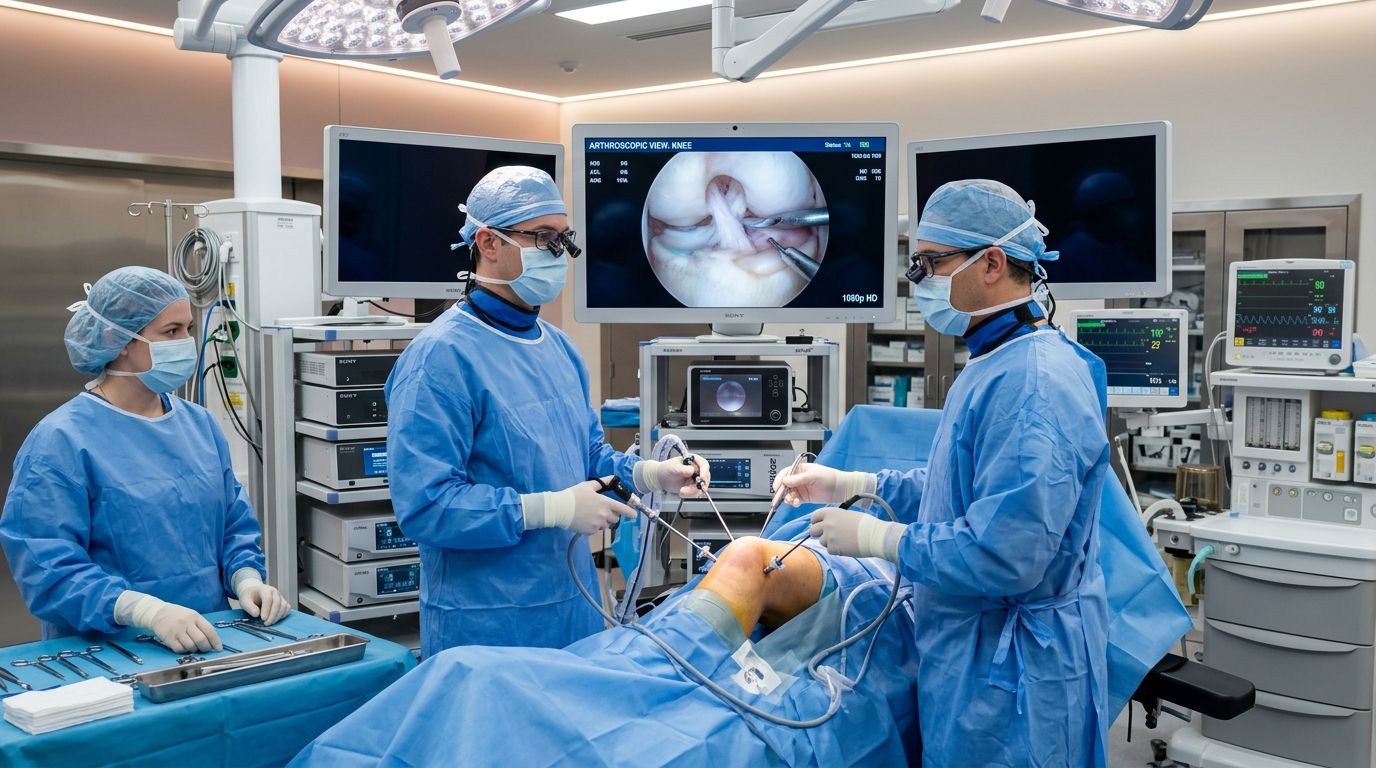
Knee arthroscopy uses a camera and specialized instruments introduced through small incisions to evaluate and treat selected problems within the knee joint.
Whether arthroscopy is appropriate depends on the specific diagnosis and individual patient.
Shoulder Surgery Treatments
Shoulder surgery may be considered when structural damage, persistent symptoms, or instability cannot be adequately managed through conservative treatment.
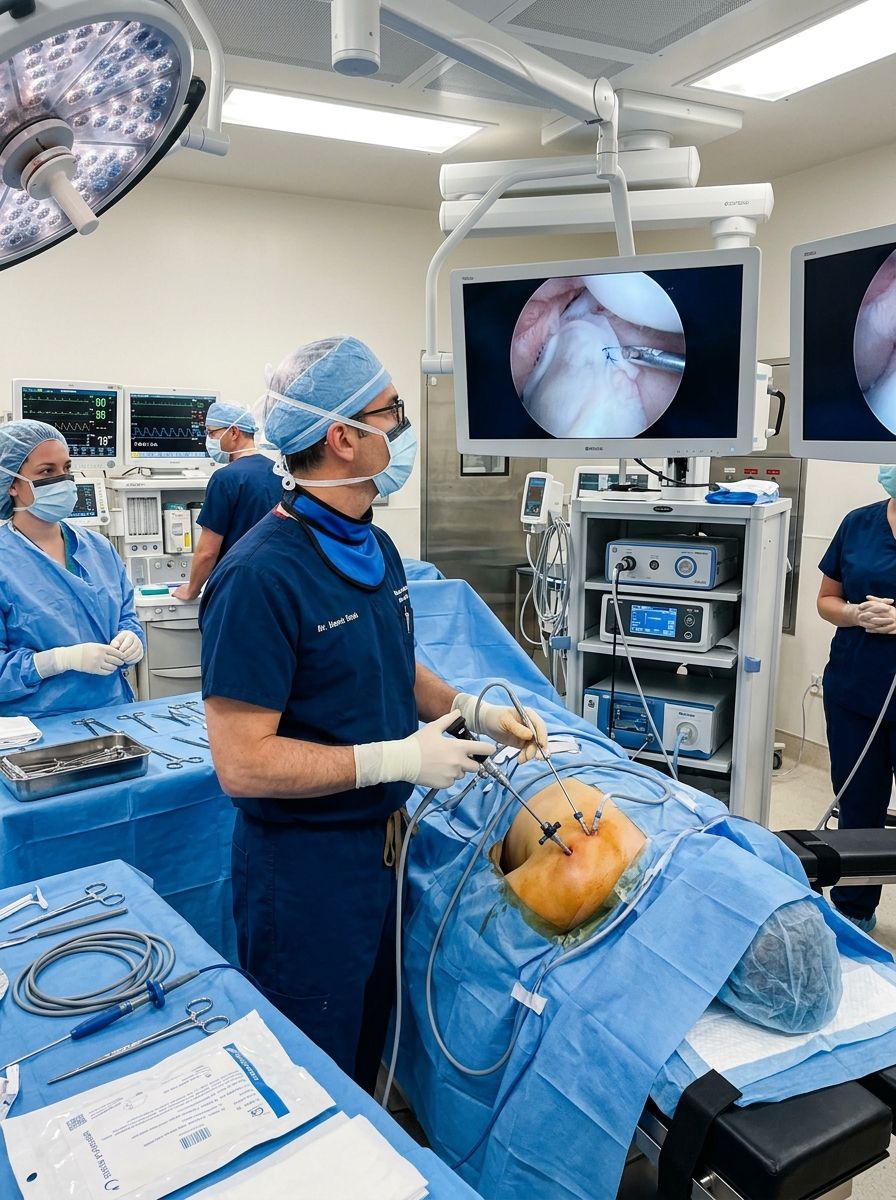
Rotator cuff repair may be considered for selected tears based on the type of injury, symptoms, functional limitations, activity demands, and individual patient.
The Latarjet procedure may be considered in selected cases of recurrent shoulder instability or dislocation.
The decision depends on factors such as the patient's anatomy, previous dislocations, associated bone loss, activity level, and sporting demands.
Shoulder arthroscopy may be used to treat selected conditions through small incisions using a camera and specialized instruments.
The procedure performed depends on the specific shoulder injury, anatomy, symptoms, and functional demands.
Hip & Ankle Arthroscopy
For selected hip and ankle conditions, arthroscopy may be considered when conservative treatment is not sufficient or when the nature of the injury requires surgical management.

Hip arthroscopy may be used for selected conditions such as labral injuries and femoroacetabular impingement, depending on the diagnosis, anatomy, symptoms, and individual patient.
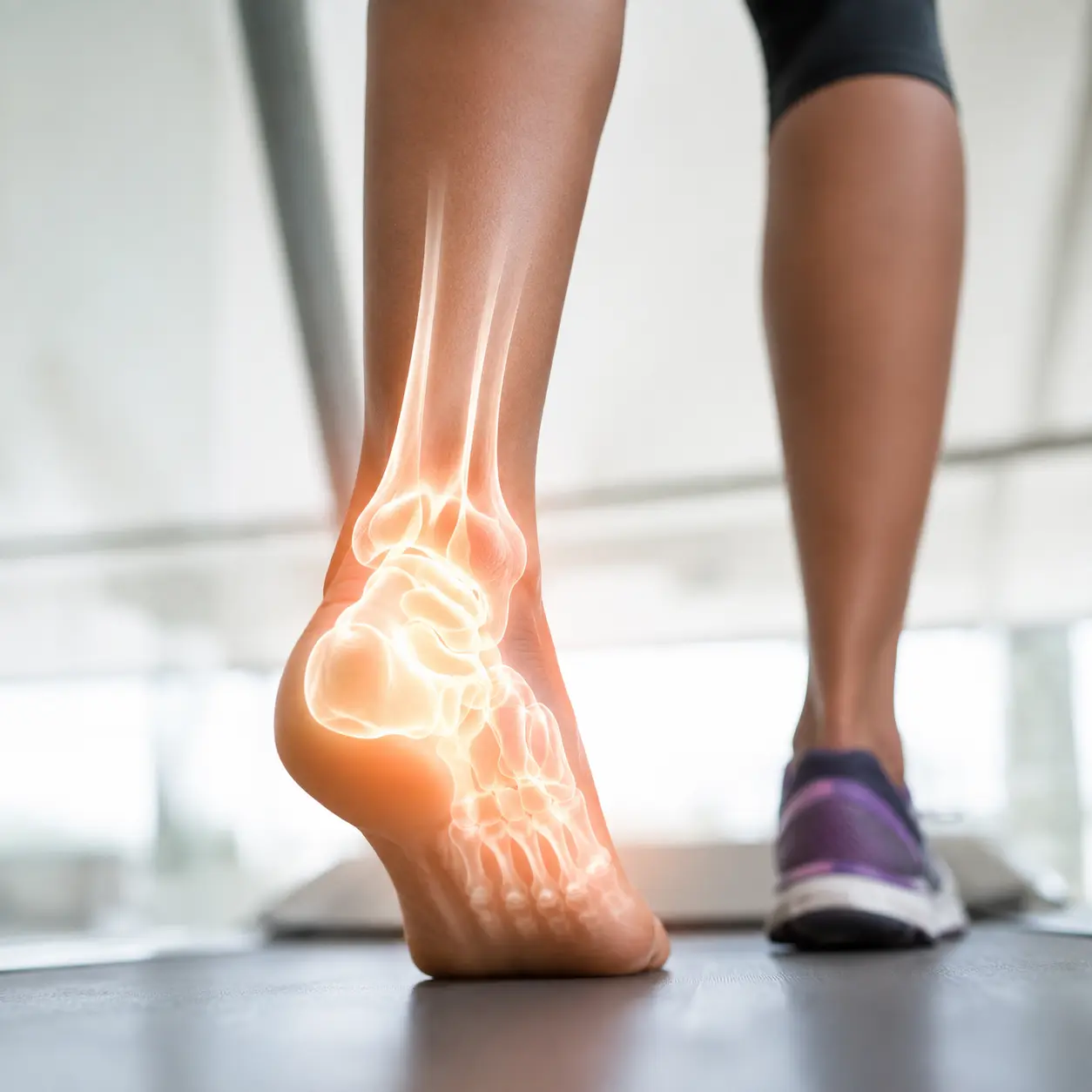
Ankle arthroscopy may be used to evaluate and treat selected problems within the ankle joint, including certain cases of tibiotalar impingement and osteochondral injuries.
Arthroscopy & Minimally Invasive Surgery
Dr Anthony Kamel performs arthroscopic and minimally invasive procedures for selected conditions affecting the knee, shoulder, hip, and ankle.
Arthroscopy allows selected joint problems to be evaluated and treated using a camera and specialized instruments introduced through small incisions.
The surgical technique is chosen according to the injury, anatomy, symptoms, activity demands, and individual patient.
The goal is not to perform surgery simply because an injury exists. It is to choose the right procedure when surgery is the appropriate treatment.
Explore Sports SurgeryFrom Treatment to Return to Sport
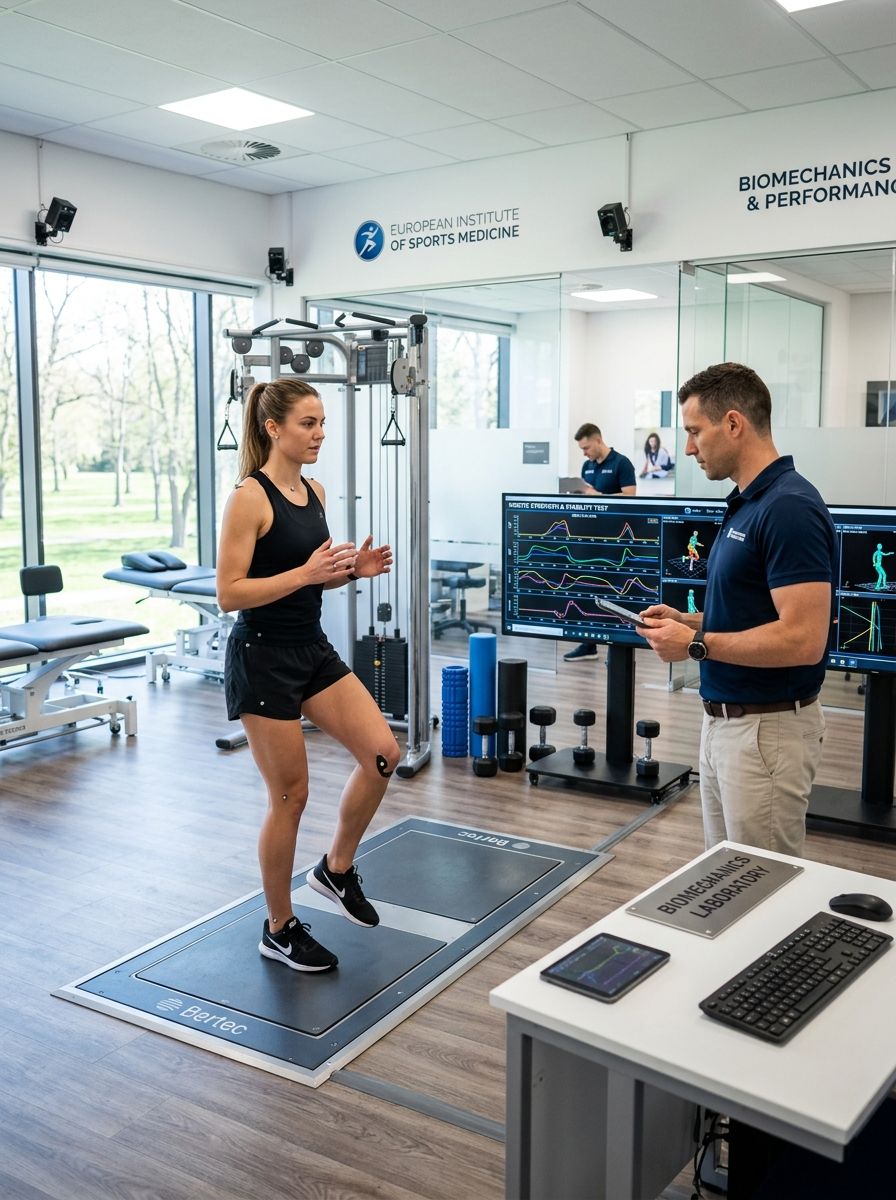
For athletes and active individuals, successful treatment doesn't end when pain improves.
Returning safely may also require restoring strength, stability, mobility, movement control, function, and sport specific readiness.
The question isn't only:
“Has the injury healed?”
It is also:
“Is the patient ready for the demands of their activity?”
About Dr Anthony Kamel
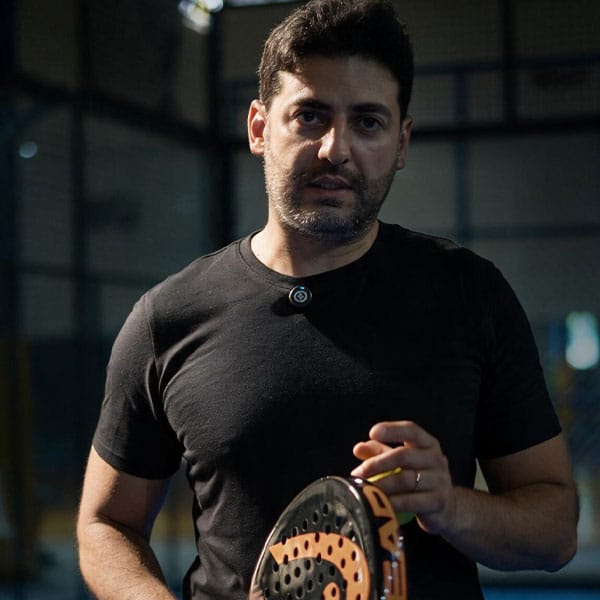
Dr Anthony Kamel is a French trained orthopedic surgeon specializing in sports medicine, sports surgery, arthroscopy, minimally invasive techniques, and ultrasound guided procedures.
His experience in sports medicine and background in Biomechanical Engineering contribute to an approach focused on understanding the injury, movement, and individual demands of each patient.
Appointments
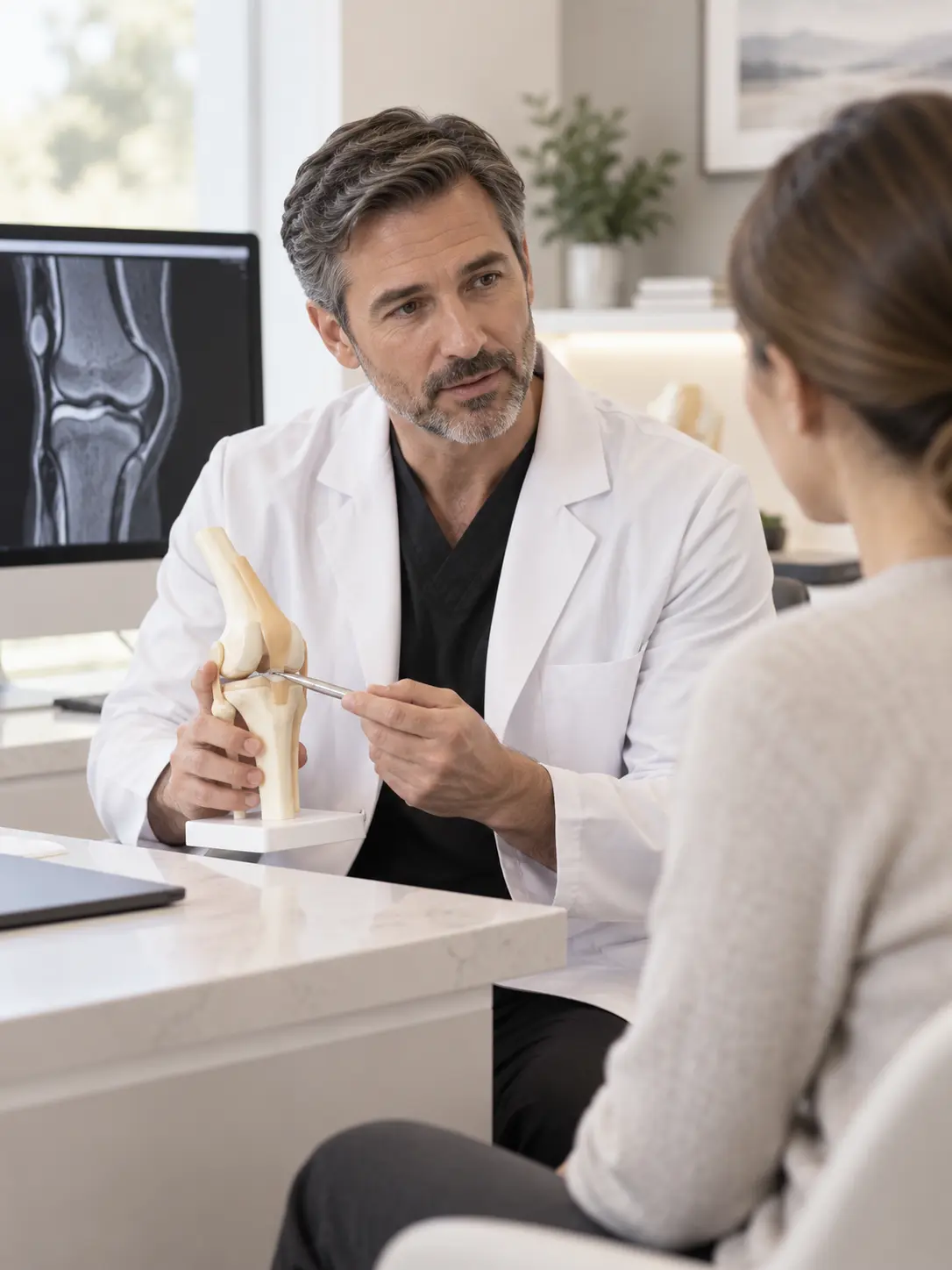
Whether treatment requires rehabilitation, an injection, an ultrasound guided procedure, arthroscopy, or sports surgery, the first step is determining what your condition actually needs.
Dr Anthony Kamel